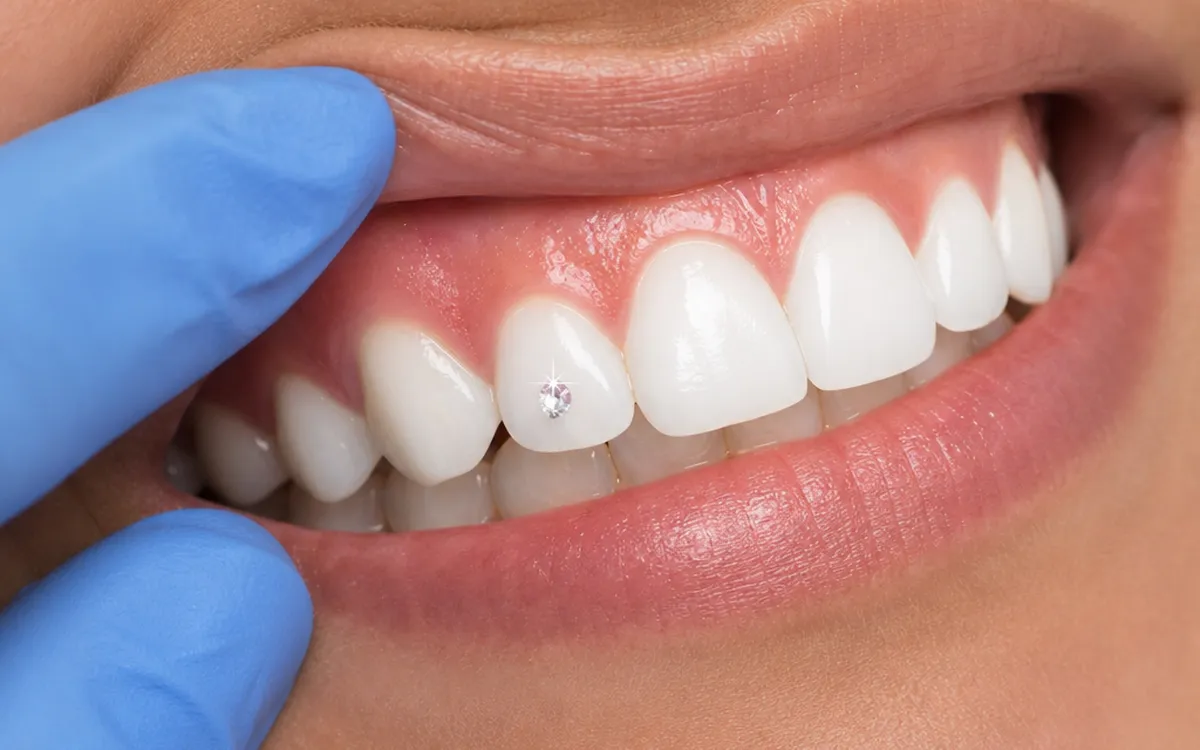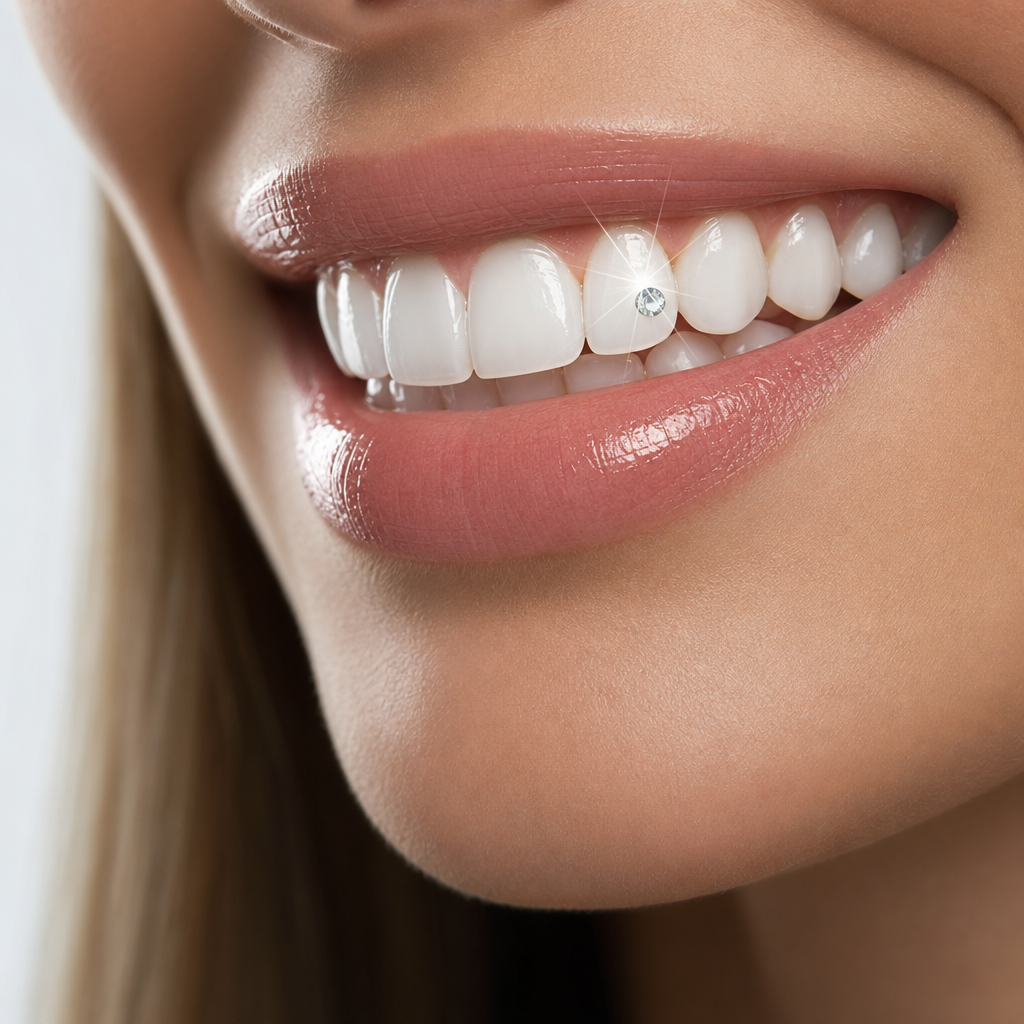
Tooth gems have surged in popularity across Toronto and beyond, and one of the first questions everyone asks is how long they actually last. The answer depends on several factors — the type of gem, the bonding material, the skill of the person applying it, and how well you care for it afterward. On average, a professionally applied tooth gem lasts between six months and two years, though some patients keep theirs for three years or longer with proper care. Understanding what influences that lifespan helps you set realistic expectations and make choices that maximize both the beauty and safety of your tooth gem.
Unlike temporary stick-on gems you find at beauty shops, a professionally bonded tooth gem is attached using the same light-cured composite resin that dentists use for aesthetic restorations. This creates a durable mechanical and chemical bond with your enamel that holds the gem firmly in place through daily brushing, eating, and normal mouth function. The bond is strong enough to last for months or years, but it is also designed to be reversible — a dental professional can remove the gem without damaging your enamel, leaving your tooth surface smooth and intact.
How Long Do Tooth Gems Last: Typical Lifespan
When patients ask how long tooth gems last, the most honest answer is that it varies — but there are clear patterns based on the application method and the type of gem used.
Professionally bonded gems. A tooth gem applied by a registered dental hygienist or dentist using proper enamel etching and light-cured composite resin typically lasts six months to two years. Many patients report their gems staying firmly attached for eighteen months or longer with consistent aftercare. The professional bonding process creates a micro-mechanical lock between the etched enamel surface and the resin, which is then cured under a dental curing light to achieve maximum bond strength. This is the same bonding chemistry used for orthodontic brackets and porcelain veneers — it is engineered for durability.
Semi-permanent adhesive gems. Some salons and non-dental providers use a weaker adhesive rather than dental-grade composite. These gems typically last two to six weeks before falling off. The adhesive lacks the etching step that creates a mechanical bond with the enamel, relying instead on surface adhesion alone. Eating sticky foods, brushing vigorously, or even normal chewing forces can dislodge a gem attached this way within days. While the shorter duration may appeal to someone who wants a temporary look for an event, the risk of swallowing a dislodged gem makes this approach less safe.
Temporary stick-on gems. Drugstore and online tooth gem kits use a simple adhesive tab similar to what holds fake nails. These last anywhere from a few hours to a few days and are not designed for eating or sleeping. They are purely decorative for a night out and have no durability whatsoever. They also tend to slide around on the tooth surface, which can cause gum irritation and an uneven appearance.
The significant difference in lifespan between professional and non-professional application is the main reason dental professionals strongly recommend having your tooth gem placed in a clinical setting. Not only does it last dramatically longer, but the application is safe for your enamel, and the provider checks that your teeth and gums are healthy enough for the procedure before bonding anything to your enamel.
What Affects Tooth Gem Longevity
Several factors influence how long your tooth gem stays securely bonded. Understanding these variables helps you make choices that extend the life of your gem and avoid habits that shorten it.
Bonding technique and material. This is the single most important factor. A properly etched enamel surface, a high-quality bonding agent, and a light-cured composite resin create a bond that withstands the forces of daily life. Skipping the etching step, using a weaker adhesive, or failing to cure the resin properly all result in a dramatically weaker bond. This is why gems applied by untrained providers fall off so quickly — they simply do not follow the dental bonding protocol that creates a durable attachment.
Gem size and shape. Larger gems and gems with irregular shapes have more surface area but also more edges that can catch on food, lips, and cheeks. Round, flat gems tend to last longer because they present a smooth, low-profile surface that minimizes mechanical interference. Gems with pointed or faceted designs may look stunning, but their raised edges are more likely to be dislodged by chewing forces or caught on abrasive foods.
Placement location. Gems placed on the upper canine or lateral incisor — the most popular positions — experience less direct chewing force than gems placed on molars or the biting edges of front teeth. The canine is a favourite spot because it is visible when you smile, it has a broad flat surface for bonding, and it does not directly contact opposing teeth when you chew. Gems on incisal edges (the biting surface) are more likely to be dislodged because they bear the brunt of your bite.
Diet and eating habits. Sticky, chewy, and hard foods are the primary enemies of tooth gem longevity. Caramel, gummy candy, taffy, and dried fruit can pull on the gem with enough force to break the bond. Hard foods like ice, hard candy, and crusty bread create direct impact forces that can crack the resin or shear the gem off. Cutting these foods out or modifying how you eat them — chewing on the opposite side of your mouth, for example — significantly extends the life of your gem.
Oral habits. Nail biting, pen chewing, using your teeth to open packages, and grinding your teeth (bruxism) all place unusual forces on the gem that can compromise the bond. If you grind your teeth at night, wearing a night guard protects both your enamel and your tooth gem from the lateral forces that can dislodge it.
Oral hygiene technique. Brushing too aggressively near the gem can gradually weaken the resin bond over time. Using a soft-bristled brush and a gentle circular motion around the gem preserves the bond while keeping the area clean. Avoid directing the water flosser or electric toothbrush at maximum power directly at the gem.
Tooth Gem Aftercare: How to Make Yours Last Longer
Proper aftercare is the difference between a tooth gem that lasts two weeks and one that lasts two years. The first forty-eight hours after application are the most critical, because the bond continues to strengthen as the resin fully cures and adapts to the oral environment. Here is a complete aftercare guide that maximizes the lifespan of your tooth gem:
First 24 hours. Avoid eating for the first hour after application to allow the bond to settle. For the remainder of the first day, eat only soft foods on the opposite side of your mouth. Avoid hot beverages above body temperature, as excessive heat can soften the resin before it has fully cured. Do not brush the gem area — let the bond mature undisturbed.
24 to 48 hours. You can resume gentle brushing with a soft-bristled toothbrush, being careful around the gem. Continue to avoid sticky, chewy, and hard foods. lukewarm beverages are fine; extremely hot drinks should still be avoided.
Ongoing care. After the first 48 hours, you can return to your normal diet with a few modifications. Avoid biting directly into very hard or sticky foods with the gemmed tooth. Brush around the gem gently with a soft brush, using a circular motion rather than a back-and-forth scrubbing motion. Floss daily, but when flossing near the gem, slide the floss through the contact point rather than snapping it down from the gumline, which could catch the gem edge. If you use a water flosser, keep the pressure moderate and avoid directing the stream straight at the gem.
Regular dental visits. Continue your regular dental cleaning schedule. Your hygienist can clean around the gem safely using professional techniques that do not compromise the bond. In fact, professional cleanings help maintain the health of the gum tissue around the gem, which prevents inflammation that could otherwise weaken the bond from the margins.
Can Tooth Gems Damage Your Teeth?
This is a common and entirely reasonable concern. The short answer is that when a tooth gem is applied and removed by a dental professional using proper techniques, it does not damage your enamel. However, there are risks associated with improper application and removal that are worth understanding.
Application safety. The professional bonding process involves lightly etching the enamel surface with a mild acid gel — the same concentration used in dental sealants and orthodontic bracket bonding. This etching creates a microscopic pattern in the outermost layer of enamel that allows the bonding resin to interlock mechanically. The etch penetrates only the top few micrometres of enamel and does not weaken the tooth structurally. When the gem is eventually removed, the residual composite is polished off and the enamel is smoothed, leaving the surface virtually identical to its pre-gem state.
Risks of non-professional application. When tooth gems are applied by untrained individuals using non-dental adhesives, several risks emerge. Some adhesives sold for home use contain chemicals not approved for intraoral use, which can irritate the gums or cause allergic reactions. Without proper isolation and etching, the gem may bond unevenly, creating a gap between the gem and the tooth where plaque and bacteria accumulate. This plaque trap can lead to localized decay or gum inflammation if left unchecked. Non-dental providers also rarely check for existing cavities, enamel defects, or gum disease before applying a gem, which means underlying problems go untreated beneath the decoration.
Removal safety. Removing a tooth gem requires the same professional care as applying one. A dental hygienist or dentist uses a specialized hand instrument to gently break the composite bond, then polishes away any residual resin with a fine abrasive. The process takes a few minutes and leaves the enamel smooth. Attempting to pry a gem off at home with a fingernail, tweezers, or a metal tool can fracture the enamel, damage the gum, or leave rough resin residue that collects plaque. Never remove a tooth gem yourself — always have it done professionally.
Plaque accumulation. The area around a tooth gem requires slightly more attention during daily brushing because the gem creates a small margin where the composite meets the enamel. If you brush thoroughly and floss regularly, this margin stays clean and the surrounding gum and enamel remain healthy. Patients who neglect oral hygiene around the gem can develop localized gingivitis or, in rare cases, a small cavity at the margin. This is not a flaw of the gem itself — it is a reminder that any dental appliance requires consistent home care.
How Tooth Gems Are Applied (and Removed)
Understanding the application process helps you appreciate why professional placement lasts so much longer and why it matters for your safety. Here is what happens during a tooth gem appointment at Krystal Dental Hygiene:
Step 1 — Examination. Before any bonding, the hygienist examines the tooth to confirm it is free of cavities, enamel defects, and active gum disease. If there is any decay or inflammation, the gem cannot be placed until the issue is resolved. This step is critical and is almost never performed at non-dental salons.
Step 2 — Cleaning and isolation. The tooth is cleaned with a professional-grade polishing paste and then isolated with cotton rolls or a rubber dam to keep it completely dry. Moisture is the enemy of dental bonding — even trace amounts of saliva can reduce bond strength by fifty percent or more.
Step 3 — Etching. A thirty-seven percent phosphoric acid etchant is applied to the specific area of enamel where the gem will sit for twenty to thirty seconds. This creates the microscopic enamel pattern that the resin will lock into. The etchant is then rinsed off thoroughly and the surface is dried.
Step 4 — Bonding agent. A thin layer of dental bonding agent is applied to the etched enamel and cured with a blue LED curing light for ten to twenty seconds. This agent chemically links the enamel to the composite resin that will hold the gem.
Step 5 — Gem placement. A small amount of light-cured composite resin is placed on the base of the gem, which is then positioned on the prepared enamel surface. The hygienist carefully adjusts the gem's orientation and presses it firmly to ensure full contact with the tooth. Excess resin around the edges is smoothed to create a seamless margin that will not trap plaque.
Step 6 — Curing. The curing light is applied for twenty to forty seconds, fully hardening the composite and locking the gem in place. The bond is immediately at full strength, though it continues to improve slightly over the next 24 hours as the resin reaches its ultimate maturity.
Removal process. When you are ready to remove or replace your tooth gem, the hygienist uses a specialised hand instrument to gently fracture the composite bond. The gem lifts off, and any remaining resin is carefully scraped away and the enamel is polished smooth. The entire removal takes about five minutes and leaves no visible trace on the tooth.
Types of Tooth Gems: Which Lasts Longest?
The type of gem you choose affects both the aesthetics and the longevity of your tooth gem. Here are the most common options and how they compare in terms of durability:
Swarovski crystal gems. The most popular choice, Swarovski crystals offer brilliant sparkle in a flat, low-profile design that bonds securely to the enamel. Their smooth base and flat profile create excellent contact with the tooth surface, which maximizes bond strength. They are available in dozens of colours and sizes, typically ranging from two to four millimetres in diameter. Because they are flat and light, they experience minimal mechanical interference during chewing and tend to last the longest of all gem types — often twelve to twenty-four months or more.
Gold tooth gems. Solid gold gems — typically 18K or 24K — are growing in popularity for their warm, luxurious appearance. They are slightly heavier than crystal gems and may have a more three-dimensional shape, which can mean slightly more edge exposure to mechanical forces. However, gold is inert, biocompatible, and will not tarnish or oxidize in the oral environment. With proper bonding, gold gems last comparably to crystal gems, typically nine to eighteen months.
Shaped and themed gems. Stars, hearts, diamonds, and custom shapes offer creative expression but come with a durability trade-off. Their irregular shapes create raised edges that catch on food and lips more easily than round flat gems, increasing the chance of dislodgement. If you choose a shaped gem, be extra mindful of your eating and brushing habits around it. Shaped gems typically last six to twelve months.
Twinkles and micro-gems. These tiny gems — often one to two millimetres — are designed for subtle sparkle. Their small size means less surface area for bonding, which can slightly reduce longevity compared to a larger flat gem. However, their minimal profile also means they experience very little mechanical interference. Micro-gems typically last six to twelve months with proper care.
Tooth Gems Near Me: Why Provider Choice Matters
If you are searching for tooth gems near you, the provider you choose makes all the difference in the quality, safety, and longevity of your result. Here is what to look for and what to avoid:
Choose a dental professional. A registered dental hygienist or dentist has the training, materials, and clinical environment to bond a tooth gem safely and durably. They use dental-grade etchant, bonding agent, and composite resin — materials specifically formulated and approved for use on enamel. They work in a clean, sterilized environment that prevents infection, and they examine your teeth before the procedure to ensure you are a suitable candidate. If a problem arises — sensitivity, gum irritation, or a loose gem — a dental professional can address it immediately.
Avoid non-dental salons and home kits. Beauty salons, mall kiosks, and home application kits cannot replicate the dental bonding process. They typically use non-dental adhesives that lack the etching chemistry needed for a durable bond, and they rarely screen for dental problems before application. The gems they apply fall off quickly, and the adhesives they use may not be safe for prolonged oral contact. If a gem applied at a salon falls off and is swallowed or aspirated, there is no clinical support available — a risk that does not exist in a dental setting.
Ask about the bonding protocol. When evaluating a provider, ask whether they etch the enamel, use a bonding agent, and cure the composite with a dental curing light. If any of these steps are skipped, the gem will not last as long and the bond may not be safe for your enamel. A reputable provider will happily explain their process.
Consider aftercare support. A quality provider offers follow-up support if your gem loosens, if you experience sensitivity, or if you decide you want it removed. Ask whether the provider includes a warranty or touch-up within the first few weeks. At Krystal Dental Hygiene, we offer a complimentary re-bond within the first month if a gem comes off due to bonding failure — a guarantee that non-dental providers cannot match.
For patients looking for tooth gems in Toronto, Krystal Dental Hygiene provides professional application by a registered dental hygienist in a clinical environment. Our Fort York location is convenient for downtown Toronto residents, and our application process follows the full dental bonding protocol for maximum durability and safety.
Why Choose Krystal Dental Hygiene for Tooth Gems
Krystal Dental Hygiene is one of the few dental hygiene practices in Toronto that offers tooth gems as a cosmetic service, and our approach prioritizes both the beauty of the result and the health of your teeth. Every tooth gem at our practice is applied by Krystyna Korolchuk, a registered dental hygienist with the training and clinical experience to perform the procedure safely and with lasting results.
Our application process follows the complete dental bonding protocol — enamel etching, bonding agent, light-cured composite resin, and curing — which is why our gems consistently last longer than those applied at non-dental providers. We examine every patient's teeth and gums before the procedure to confirm there are no cavities, enamel defects, or active gum disease that could compromise the result or the patient's health. This screening step is absent at salons and home applications, and it is one of the key reasons professional placement is safer.
We carry a curated selection of Swarovski crystal gems in multiple colours and sizes, as well as solid gold options, so you can choose the style that best fits your personality. Every gem is sterilized before placement, and we use single-use disposable items throughout the procedure to maintain the highest infection control standards.
After your gem is placed, we provide detailed aftercare instructions and offer a complimentary re-bond within the first month if the gem comes off due to a bonding issue — not because of improper aftercare. When you are ready to remove or replace your gem, we perform the removal professionally, leaving your enamel smooth and undamaged.
Book your tooth gem appointment and let a registered dental hygienist give you a sparkle that lasts.
Book Your Tooth Gem Appointment
Professional application by a registered dental hygienist. Safe bonding, stunning results, and a gem that lasts.