A brighter smile is one of the most requested cosmetic improvements worldwide, and for good reason — research consistently shows that whiter teeth boost confidence, improve first impressions, and enhance overall quality of life. But with so many whitening options available, from drugstore strips to online kits, how do you know what actually works and what is safe?
Philips Zoom Whitening is the gold standard in professional, in-office teeth whitening. It is the number-one patient-requested whitening brand globally, backed by extensive clinical research and trusted by dental professionals for over two decades. At Krystal Dental Hygiene in Toronto, we offer Philips Zoom because it delivers exceptional results — up to eight shades whiter in a single visit — while prioritizing the health and safety of your enamel.
This guide covers everything you need to know about Philips Zoom: the science behind how it works, what your appointment will look like, safety data, side effect management, and how to make your results last. Whether you are considering whitening for the first time or looking for a better option than what you have tried before, this article will help you make an informed decision.
What Is Philips Zoom Whitening?
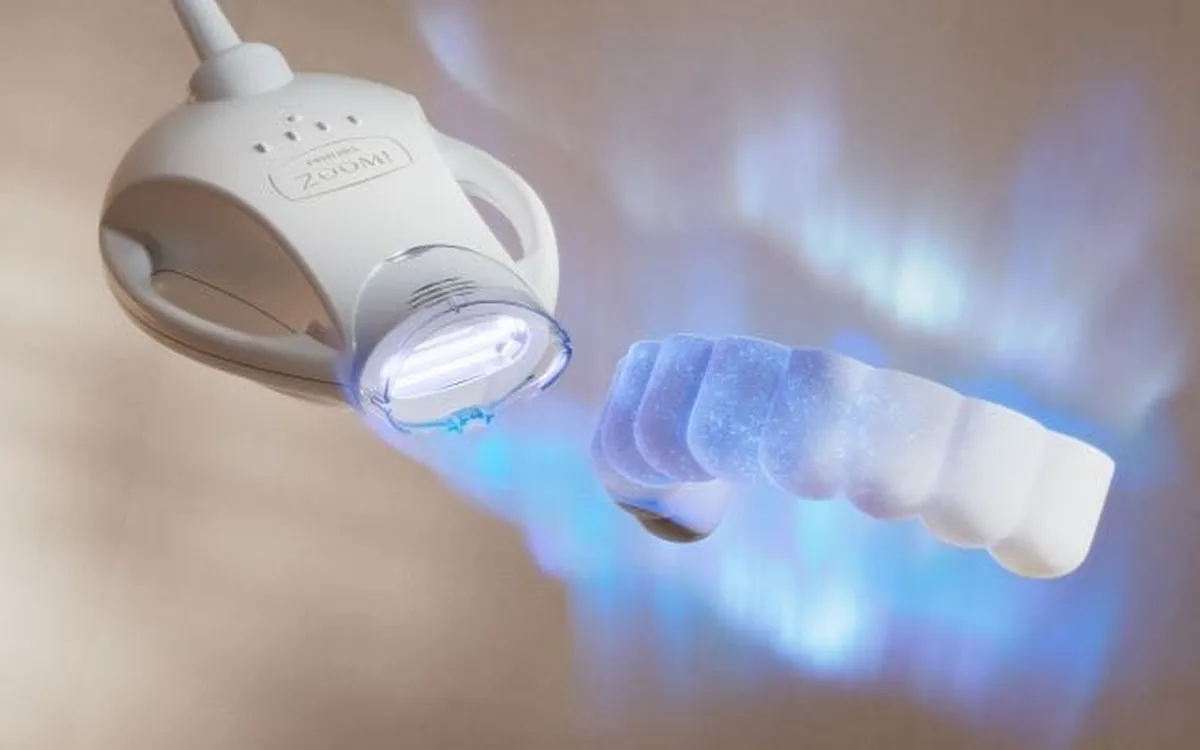
Philips Zoom is a professional teeth whitening system administered by trained dental professionals in a clinical setting. Unlike over-the-counter products that use low concentrations of whitening agents and deliver gradual results over weeks, Philips Zoom uses a high-concentration hydrogen peroxide gel activated by a specialised LED light to achieve dramatic whitening in approximately one hour.
The Zoom system was developed by Philips, a global leader in healthcare technology, and has been refined through years of clinical research. What sets Zoom apart from other professional whitening systems is its proprietary ACP (Amorphous Calcium Phosphate) formula. ACP is a breakthrough ingredient that actively protects and strengthens enamel during the whitening process — meaning Zoom does not just whiten your teeth, it helps keep them healthy while doing so.
Philips Zoom is available in two formats: the in-office treatment, which delivers the most dramatic results in the shortest time, and professional take-home kits with custom-fitted trays for maintenance and touch-ups. Both formats are designed to work together for long-lasting results.
The Science: How Zoom Whitening Works
Understanding how teeth whitening works requires a brief look at tooth anatomy. Your teeth have an outer layer of enamel that is semi-translucent, and an inner layer of dentine that is naturally yellowish. Over time, stain molecules from food, drinks, and habits accumulate within the enamel and dentine, making teeth appear darker.
Whitening gels work by breaking down these stain molecules. The active ingredient in Zoom's in-office gel is 25% hydrogen peroxide. When the LED light activates the gel, the hydrogen peroxide breaks down into water and oxygen radicals. These highly reactive oxygen molecules penetrate the enamel and dentine, breaking the molecular bonds that hold stain compounds together. As the bonds break, the stain molecules are released, and your teeth appear lighter.
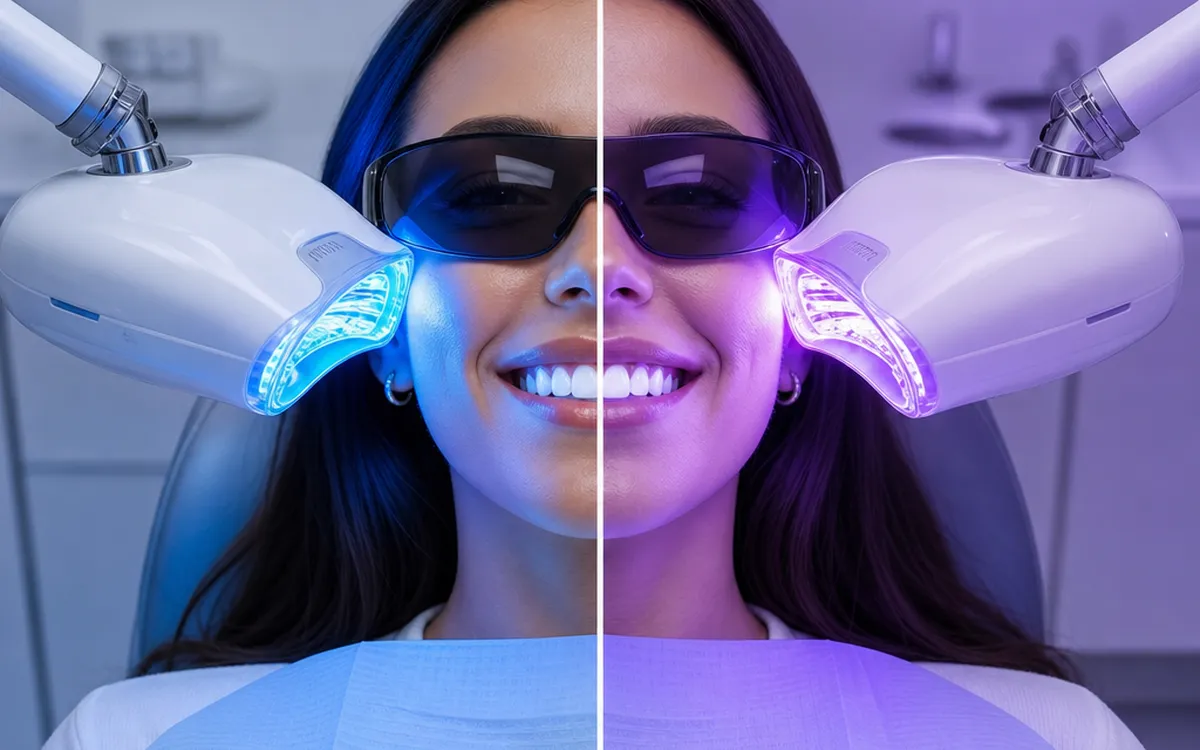
The Philips Zoom LED light plays a critical role in the process. It emits a specific wavelength of blue light that acts as a catalyst, accelerating the breakdown of hydrogen peroxide and enhancing the penetration of oxygen radicals into the tooth structure. This photochemical activation is what allows Zoom to achieve results in 15-minute intervals that would take weeks with at-home products using lower concentrations.
Importantly, the Zoom gel also contains ACP (Amorphous Calcium Phosphate), potassium nitrate, and fluoride. This combination serves three purposes: ACP remineralizes enamel and adds lustre, potassium nitrate reduces sensitivity by calming the nerves inside the teeth, and fluoride strengthens the enamel surface. This three-ingredient protective system is exclusive to Zoom and is a major reason why dental professionals trust it over other whitening systems.
Carbamide Peroxide vs Hydrogen Peroxide: What's the Difference?
Teeth whitening products use one of two active ingredients: hydrogen peroxide or carbamide peroxide. Understanding the difference helps you evaluate whitening options confidently.
Hydrogen peroxide is the direct active whitening agent. It works immediately upon application, breaking down stain molecules quickly. This is why Philips Zoom in-office treatment uses hydrogen peroxide — it delivers faster, more dramatic results in a shorter appointment.
Carbamide peroxide is a compound that breaks down into hydrogen peroxide and urea when it contacts water. Typically, carbamide peroxide breaks down to approximately one-third its concentration in hydrogen peroxide — so a 30% carbamide peroxide gel delivers roughly 10% hydrogen peroxide. This slower release makes carbamide peroxide the preferred ingredient for take-home whitening kits, where the gel is worn for longer periods (overnight or several hours).
Both agents are equally safe when administered correctly under professional supervision. Neither damages enamel or weakens tooth structure when used as directed. The main practical difference is speed: hydrogen peroxide whitens faster, making it ideal for in-office treatments, while carbamide peroxide provides a gentler, longer-lasting release suitable for at-home trays.
Philips Zoom uses hydrogen peroxide for its in-office treatment and carbamide peroxide for its take-home kits, giving you the best of both formats depending on your needs.
Step-by-Step: What to Expect at Your Zoom Appointment
Knowing exactly what happens during a Zoom whitening appointment helps ease any anxiety and lets you prepare. Here is the typical process from start to finish:
Step 1 — Consultation and shade assessment. Your hygienist evaluates your current tooth shade using a professional shade guide, discusses your whitening goals, and assesses whether Zoom is the right option for your teeth. If you have existing restorations (crowns, veneers, or fillings), your hygienist will explain that these will not whiten and discuss how to address this.
Step 2 — Pre-whitening cleaning. A thorough cleaning removes biofilm, plaque, and surface stains so the whitening gel can make direct, even contact with your enamel. This is where a GBT cleaning before whitening makes a significant difference in results.
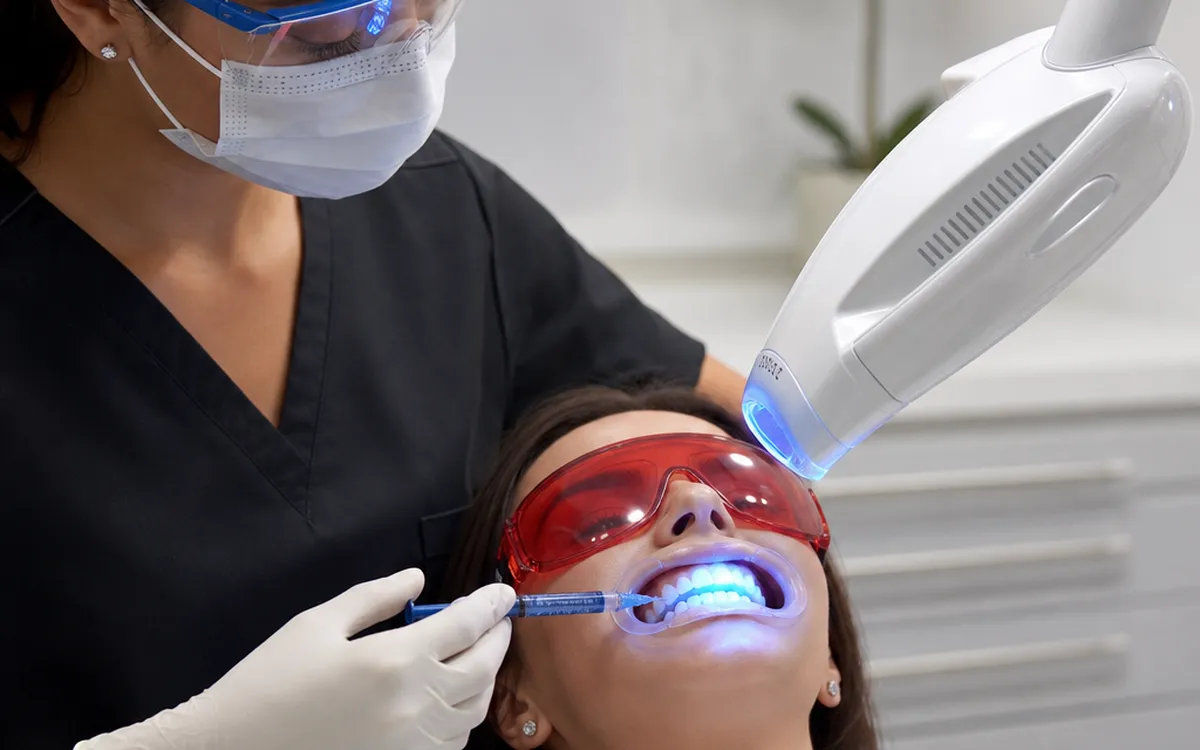
Step 3 — Soft tissue protection. Your hygienist applies a protective barrier to your gums and any exposed root surfaces. A lip retractor is placed to keep your lips and cheeks away from the gel. Your eyes are protected with special glasses. These precautions ensure the whitening gel only contacts your teeth.
Step 4 — Gel application and LED activation (3–4 cycles). The Zoom hydrogen peroxide gel is carefully applied to the front surfaces of your teeth. The Zoom LED light is positioned over your mouth and activated for 15 minutes. During this time, the light accelerates the gel's stain-breaking action. This cycle is typically repeated three to four times, with fresh gel applied each cycle, for a total treatment time of approximately 45–60 minutes.
Step 5 — Post-whitening fluoride treatment. After the final cycle, the gel is removed and a fluoride gel or paste is applied to your teeth. This helps reduce any temporary sensitivity and strengthens your enamel. Your hygienist provides detailed aftercare instructions, including the 48-hour "white diet" rule.
The entire appointment typically takes about 90 minutes from start to finish, including consultation, cleaning, whitening, and aftercare.
Results: How White Will Your Teeth Get?
Philips Zoom is one of the most effective professional whitening systems available, capable of lightening teeth by up to eight shades in a single in-office session. However, individual results vary based on several factors:
- Your starting shade — teeth that are significantly stained or yellowed may see more dramatic improvement than teeth that are only slightly discoloured
- The type of staining — extrinsic stains (from coffee, tea, wine, tobacco) respond extremely well to Zoom; intrinsic stains (from medications, trauma, or aging) may respond less dramatically
- Your enamel thickness — thinner enamel allows more of the naturally yellow dentine to show through, which may limit how white your teeth can become
- Your age — younger teeth typically whiten more easily than older teeth, which may have deeper, more set-in staining
- Compliance with aftercare — following the 48-hour rule and maintaining good habits directly affects how bright and how long your results last
Professional whitening provided by a dental professional is the most long-lasting option available. Results typically last between 12 and 24 months, depending on your lifestyle and oral hygiene habits. Regular touch-ups with a professional whitening touch-up every 6 to 12 months help maintain your brightest shade year-round.
Is Philips Zoom Whitening Safe?
Safety is the most common concern patients have about teeth whitening. The short answer is: yes, Philips Zoom whitening is safe when administered by a trained dental professional. Here is what the evidence says:
Extensive clinical research supports Zoom's safety. Philips has conducted numerous clinical studies demonstrating that Zoom whitening, when administered according to protocol by a trained and accredited professional, has no adverse effect on enamel structure, existing fillings, or crowns. The ACP formula in Zoom actually provides greater enamel lustre and protection than whitening gels without ACP.
Zoom does not damage enamel. Unlike some over-the-counter products that can be used excessively or incorrectly, Zoom's professional administration ensures the gel is applied at the correct concentration, for the correct duration, with proper soft tissue protection. The ACP, potassium nitrate, and fluoride in the gel actively protect your teeth during the process.
Professional supervision is the key safety factor. The risks associated with teeth whitening — gum irritation, uneven whitening, or over-whitening — are almost always the result of unsupervised, at-home use of products that are not tailored to the individual patient. When a dental professional assesses your teeth first, selects the appropriate concentration, and protects your soft tissues, the risk of adverse effects is minimal.
Both hydrogen peroxide and carbamide peroxide are safe when administered correctly. Neither agent eats away at enamel or damages your mouth when applied properly with gum protection. The professional take-home Zoom kits provide custom-moulded trays that ensure the gel stays on your teeth and away from your gums.
Teeth Whitening Side Effects and How to Manage Them
While Philips Zoom is safe, some patients experience temporary side effects. Understanding what to expect helps you prepare and manage any discomfort effectively.
Tooth sensitivity is the most common side effect. During and after whitening, your teeth may feel more sensitive to hot, cold, and sweet stimuli. This occurs because the whitening process temporarily opens microscopic channels (dentinal tubules) in the enamel, creating a direct pathway to the tooth nerve. For most patients, sensitivity is mild and subsides within one to three days after treatment.
Zoom's formula is specifically designed to minimize sensitivity. The potassium nitrate in the gel acts as a desensitizing agent by blocking nerve signals in the teeth, and the ACP helps seal the dentinal tubules after whitening. Many patients find Zoom significantly more comfortable than other whitening systems they have tried.
Gum irritation can occur if the whitening gel contacts the gums. This is why professional Zoom treatment includes careful gum protection — a physical barrier is applied to isolate the gums before the gel. Minor gum sensitivity that does occur typically resolves within 24–48 hours.
To manage sensitivity after whitening:
- Use a desensitizing toothpaste for one week before and after your appointment
- Avoid extremely hot or cold foods and beverages for the first 48 hours
- Take over-the-counter pain relief (ibuprofen or acetaminophen) if needed
- Your hygienist may apply a professional fluoride treatment to further reduce sensitivity
If you have a history of significant tooth sensitivity, mention this during your consultation. Your hygienist may recommend a pre-treatment desensitizing protocol or adjust the number of whitening cycles to ensure your comfort.
What to Do After Zoom Whitening: The 48-Hour Rule
The first 48 hours after professional whitening are critical for protecting your results. During this period, your enamel is more porous and susceptible to staining because the whitening process has temporarily opened the dentinal tubules. As these tubules gradually close over the next two days, your teeth become more stain-resistant again.
During the 48-hour "white diet," avoid:
- Coffee and tea (all types, including iced)
- Red wine and dark alcoholic beverages
- Dark sodas and coloured sports drinks
- Dark berries, beets, soy sauce, tomato sauce, and curry
- Dark chocolate and any strongly coloured foods
- Smoking or any tobacco products
Safe choices during the 48-hour window include:
- Water (still or sparkling)
- Clear broths and soups
- White rice, pasta, and bread
- Chicken, turkey, and white fish
- Dairy products (milk, yoghurt, cottage cheese)
- Bananas, apples, and pears
After the first 48 hours, you can gradually reintroduce your normal diet. However, to maximize the longevity of your whitening results, consider using a straw for stain-heavy beverages, rinsing with water after consuming coffee or tea, and maintaining consistent oral hygiene. Learn more about managing staining habits in our coffee and tea stains article.
Philips Zoom vs At-Home Whitening: Honest Comparison
With so many whitening products available, it helps to understand how professional Zoom compares to the alternatives:
Philips Zoom In-Office:
- Concentration: 25% hydrogen peroxide (professional strength)
- Results: Up to 8 shades whiter in one visit
- Time: ~90 minutes total appointment
- Safety: Professional gum protection and monitoring throughout
- Sensitivity management: ACP + potassium nitrate + fluoride built into the gel
- Customization: Hygienist adjusts number of cycles based on your sensitivity and goals
Professional Take-Home Kits (Zoom NiteWhite/DayWhite):
- Concentration: Custom-selected carbamide or hydrogen peroxide
- Results: Gradual whitening over 1–2 weeks
- Time: 30 minutes to overnight wear per day
- Safety: Custom-moulded trays prevent gel contact with gums
- Best for: Maintenance after in-office Zoom, or patients who prefer gradual change
Over-the-Counter Strips and Gels:
- Concentration: Typically 5–14% hydrogen peroxide (much lower than professional)
- Results: 1–3 shades whiter over 2–4 weeks
- Time: 30–60 minutes daily for weeks
- Safety: Generic fit means gel may contact gums; no professional supervision
- Limitations: One-size-fits-all strips cannot whiten between teeth or along the gumline evenly
"Natural" Whitening Methods (baking soda, activated charcoal, lemon juice):
- No clinical evidence of effective whitening
- Baking soda and charcoal are abrasive and can damage enamel with repeated use
- Lemon juice and vinegar are acidic and erode enamel permanently
- Not recommended by any dental professional
The choice between these options ultimately depends on your goals, timeline, and budget. Professional Zoom delivers the fastest, most dramatic, and safest results. Take-home kits are an excellent complement for maintenance. Over-the-counter products can provide modest improvement but cannot match professional treatment in speed, consistency, or safety.
Can You Whiten Teeth Under 18?
Age is an important consideration in teeth whitening. In most jurisdictions, including Canada, professional teeth whitening is not recommended for patients under 18 years of age. The primary reasons are clinical: younger teeth have larger pulp chambers (the living tissue inside the tooth), which makes them more susceptible to sensitivity from whitening agents. The enamel in young patients is also still developing, and the long-term effects of peroxide on immature enamel have not been sufficiently studied.
If your teenager is concerned about tooth discolouration, the best first step is a professional cleaning. Often, what appears to be permanent staining is actually surface biofilm and stain that a thorough GBT cleaning can remove safely and effectively — without any whitening chemicals at all. GBT's AIRFLOW technology removes surface stains as part of the cleaning process, often lightening teeth by several shades while remaining completely safe for patients of any age.
For young patients who do want whitening after age 18, starting with a professional cleaning first is always the recommended approach. Clean teeth whiten better and more evenly because the gel can make direct contact with enamel rather than being partially blocked by biofilm and surface deposits.
Should You Get a GBT Cleaning Before Whitening?
The short answer is yes — and here is why it makes a measurable difference.
Professional teeth whitening works by allowing the peroxide gel to penetrate your enamel and break down stain molecules. But if there is a layer of biofilm, plaque, or surface stain between the gel and your enamel, the gel's effectiveness is significantly reduced. Think of it like trying to bleach a shirt that still has dirt on it — the bleach cannot reach the fabric underneath the grime.
A Guided Biofilm Therapy (GBT) cleaning before whitening ensures that your enamel is completely clean and free of biofilm, surface stains, and tartar. GBT removes up to 100% of biofilm using warm water and gentle erythritol powder — compared to roughly 50% removal with traditional polishing methods. This means the whitening gel can make direct, uniform contact with every surface of every tooth, resulting in more even and more effective whitening.
GBT also removes surface stains that may not respond to whitening gel alone. Coffee, tea, and tobacco stains on the enamel surface are physically removed by the AIRFLOW technology, meaning the peroxide can focus on the deeper, intrinsic stains that actually require chemical bleaching. The result is a brighter, more consistent outcome.
For patients with sensitive teeth, GBT is also the ideal pre-whitening cleaning because it is gentle on exposed dentine and receded gumlines. Traditional scaling and abrasive polishing can irritate already-sensitive areas, but GBT's warm water and soft erythritol powder clean comfortably without causing additional sensitivity before your whitening appointment.
Book Your Philips Zoom Session in Toronto
At Krystal Dental Hygiene, Philips Zoom professional whitening is one of our most popular services — and for good reason. As an independent dental hygienist in Toronto, I provide personalized care in a relaxed, unhurried setting. Every Zoom appointment includes a thorough consultation, shade assessment, professional gum protection, and detailed aftercare instructions to ensure your results are both beautiful and long-lasting.
We recommend combining your Philips Zoom whitening with a GBT cleaning for the best possible outcome. The cleaning removes biofilm and surface stains so the whitening gel can work at full effectiveness, and both treatments can be completed in a single appointment at our Fort York clinic.
Already had Zoom whitening and want to maintain your bright smile? Read our complete whitening aftercare guide for the 48-hour rules, stain-blocking habits, and touch-up timing. A professional whitening touch-up every 6 to 12 months keeps your teeth at their whitest. And for more information on what whitening can and cannot do, visit our teeth whitening myths article.
This article was written by Krystyna Korolchuk, a registered dental hygienist and independent practice owner licensed under the Dental Hygienists Act, 1991 and regulated by the College of Dental Hygienists of Ontario (CDHO).
Ready for a Brighter Smile?
Book your Philips Zoom whitening appointment today and see why it is the world's most requested professional whitening brand.