Understanding Dental Anxiety
Dental anxiety is one of the most common barriers to oral health care in Canada. Research suggests that roughly one in five people experiences significant fear at the prospect of a dental appointment, and for about five percent of the population, that fear is so intense it qualifies as dental phobia — leading them to avoid the dentist entirely for years at a time. If you have ever postponed a cleaning until a small problem became a painful emergency, you already know how anxiety can compromise your health.
The reasons behind dental anxiety are varied and deeply personal. Many people trace their fear to a painful childhood experience, often involving outdated techniques that were far less gentle than what modern dental hygiene now offers. Others feel a loss of control lying back in the chair, unable to see what is happening. Some are embarrassed about the state of their teeth and worry they will be judged. Still others are troubled by the sounds — the high-pitched whine of a scaler, the spray of the polisher — that have become synonymous with discomfort in the dental chair.
Whatever the root cause, the consequence is the same: delayed visits allow plaque to harden into tartar, tartar inflames the gums, gum disease advances silently, and what could have been a simple preventive cleaning morphs into a far more involved, and more uncomfortable, procedure. It is a self-reinforcing cycle — anxiety leads to avoidance, avoidance leads to worse oral health, and worse oral health makes the next visit even more daunting.
Why Traditional Cleanings Trigger Anxiety
Understanding what makes a conventional cleaning uncomfortable is the first step toward finding a better experience. Traditional dental cleanings rely heavily on manual and ultrasonic scalers to chip away hardened tartar from the tooth surface and below the gumline. For patients with sensitive teeth, receding gums, or heavy calculus buildup, the scraping sensation can range from mildly unpleasant to genuinely painful. The ultrasonic scaler vibrates at high frequency and sprays a jet of water, which many patients find loud, messy, and unsettling — even when the clinician is skilled and careful.
After scaling, the traditional protocol calls for a rubber cup and coarse polishing paste. The paste is abrasive by design — it needs to scrub away residual stains — and the spinning cup can flick paste and saliva around the mouth. For anxious patients, the combination of vibration, noise, gritty texture, and lack of control is overwhelming. It is no wonder that people who have endured this kind of cleaning once are reluctant to return.
The pace of a traditional appointment can also be a source of stress. When the hygienist is working against the clock with tools that require physical force, the experience can feel rushed. Questions go unasked because the patient cannot speak with instruments in their mouth, and the sense that the clinician is "just getting through it" does little to build trust.
How GBT Makes Dental Cleanings Comfortable
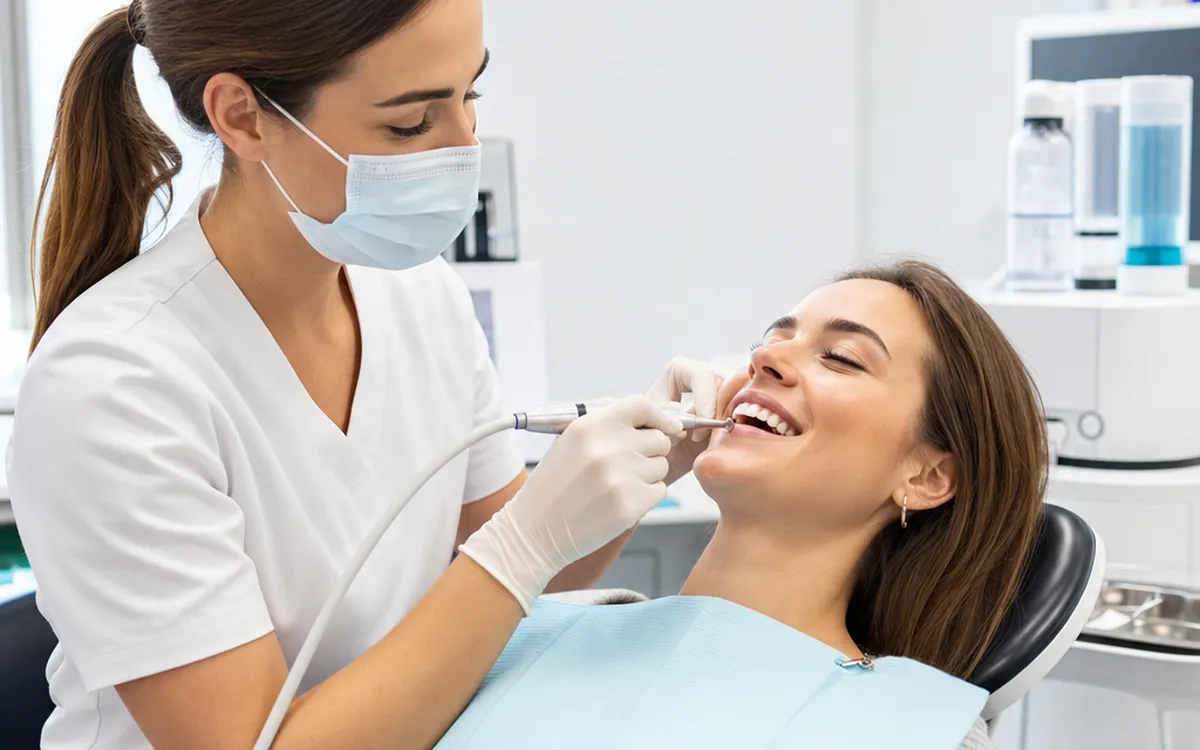
Guided Biofilm Therapy (GBT) is a modern, evidence-based protocol that was designed to remove biofilm, stains, and early calculus without the discomfort that makes traditional cleanings so feared. Instead of scraping, GBT uses warm AIRFLOW technology — a fine powder-and-water spray that gently and thoroughly removes plaque biofilm and stains from every surface of the tooth, including between teeth and below the gumline, where a scaler alone cannot easily reach.
For patients with dental anxiety, the differences are transformative. There is no scraping. There is no high-pitched ultrasonic vibration. The AIRFLOW wand delivers a warm, gentle spray that most patients describe as a pleasant tingling sensation rather than discomfort. The powder used is erythritol-based — incredibly fine and completely safe — and because the powder is heated before delivery, patients do not experience the cold-water shock that is so common with traditional polishers and ultrasonics.
When calculus is present, GBT uses a PIEZON NO PAIN ultrasonic instrument with a slim, warm tip that glides smoothly along the tooth surface. The tip is so gentle it can be used safely on exposed root surfaces, around implants, and on teeth with severe sensitivity — situations where a traditional scaler would be intolerable. Independent studies have confirmed that GBT removes up to 100 % of dental biofilm compared to roughly 50 % with conventional scaling and polishing, which means each visit delivers a more thorough result in less time, with far less physical stress on the patient.
Because the GBT protocol follows a structured eight-step process — from disclosing biofilm with a stain to targeted removal, risk assessment, and personalized home-care coaching — the appointment feels organized and predictable. Anxious patients consistently report that knowing exactly what comes next reduces their sense of helplessness and allows them to relax.
If you want a deeper dive into the science behind GBT, our complete guide to Guided Biofilm Therapy covers the full eight-step protocol, the research behind it, and why it is considered the gold standard for modern preventive care.
Tips for Managing Dental Anxiety Before Your Appointment
Even with the gentlest technology available, feeling nervous before a dental appointment is perfectly normal. Here are practical strategies that our patients have found helpful for managing anxiety and making the experience as smooth as possible.
Choose a hygienist you trust. Under Ontario's Dental Hygienists Act, 1991, you have the legal right to see an independent dental hygienist without a dentist's referral. This means you can select a provider whose approach matches your comfort level. At Krystal Dental Hygiene, Krystyna takes the time to explain every step before it happens, so there are no surprises.
Be honest about your fear. Tell your hygienist at the time of booking that you experience dental anxiety. A good clinician will adjust the pace, offer more frequent breaks, and check in with you throughout the appointment. At Krystal Dental, we set up a simple hand-signal system — raise a finger anytime you need a pause — so you always feel in control.
Ask for a morning appointment. Scheduling your visit first thing in the morning prevents you from spending the entire day dreading it. It also means you are less likely to talk yourself out of showing up.
Bring headphones. If the sounds of the office are a trigger, noise-cancelling headphones with music or a podcast can make a dramatic difference. Most hygienists are happy to work around headphones, and at Krystal Dental, the quiet nature of AIRFLOW technology means there is very little noise to mask in the first place.
Focus on your breathing. Slow, deep breathing — in for four counts, hold for four, out for six — activates the parasympathetic nervous system and physically reduces the anxiety response. Practice this in the waiting room and continue during the appointment.
Bring a support person. Having a trusted friend or family member in the room can provide a sense of safety. At Krystal Dental, we welcome companions and find that their presence helps anxious patients relax significantly.
What to Expect at a Gentle, Anxiety-Free Cleaning
Knowing exactly what will happen during your appointment is one of the most effective ways to reduce anxiety. Here is a step-by-step walkthrough of a GBT cleaning at Krystal Dental Hygiene in Toronto.
Step 1 — Welcome and conversation. Before anything clinical happens, you will sit down with Krystyna for a brief conversation about your concerns, medical history, and what you want from the visit. This is your opportunity to mention sensitive areas, ask questions, and set the pace.
Step 2 — Biofilm disclosure. A harmless vegetable-based dye is briefly applied to your teeth. It highlights the plaque biofilm in bright colour, showing exactly where bacteria are concentrated. This takes seconds and is completely painless.
Step 3 — Motivational coaching. You will see the disclosed biofilm in a mirror. This visual feedback is empowering — you can see exactly where your brushing and flossing are effective and where they need improvement. Rather than being told what you are doing wrong, you see it for yourself.
Step 4 — AIRFLOW cleaning. The warm erythritol-powder spray gently removes all disclosed biofilm and surface stains. Most patients describe this as a warm, massaging sensation. There is no scraping, no vibration, and no discomfort.
Step 5 — Gentle PIEZON scaling (only if needed). If any hardened calculus remains, the PIEZON NO PAIN instrument removes it with a warm, slim tip that glides — rather than scrapes — along the tooth. This step is skipped entirely if no calculus is present, which is often the case for patients who visit regularly.
Step 6 — Final check and fluoride. Krystyna verifies that every surface is clean, applies a fluoride treatment if desired, and reviews your personalized home-care plan.
From start to finish, a GBT appointment at Krystal Dental is calm, structured, and entirely focused on your comfort. The entire process typically takes 45 to 60 minutes, and most patients are surprised by how quickly it passes.
CDCP Coverage for Dental Cleanings
Cost is another common source of anxiety — especially for patients who have delayed care and worry about the expense of catching up. If you are eligible for the Canadian Dental Care Plan (CDCP), the federal dental benefit program administered by Health Canada may cover preventive services including dental cleanings. Eligibility is based on adjusted family net income (AFNI), and the plan is designed to make essential oral health care accessible to Canadians who do not have private dental insurance.
At Krystal Dental Hygiene, we accept CDCP assignment directly, which means you do not need to pay out of pocket and wait for reimbursement. If you have questions about your coverage, we are happy to help you understand what the CDCP may cover before your appointment begins.
For complete details on eligibility and how the plan works, visit our Canadian Dental Care Plan information page.
Take the First Step: Book Your Comfortable Cleaning
Dental anxiety thrives in silence and avoidance. The single most effective way to break the cycle is to show up for an appointment — even a short consultation — where you can meet your hygienist, ask questions, and learn that modern preventive care does not have to hurt. At Krystal Dental Hygiene in Toronto's Fort York neighbourhood, every aspect of our practice — from Guided Biofilm Therapy to unhurried appointments to a warm, private treatment room — is designed with anxious patients in mind.
You do not need to "tough it out." You do not need to be brave. You just need to take one step, and we will take care of the rest.
This article was written by Krystyna Korolchuk, a registered dental hygienist and independent practice owner licensed under the Dental Hygienists Act, 1991 and regulated by the College of Dental Hygienists of Ontario (CDHO).
Ready for a Cleaning That Doesn't Hurt?
Book your painless GBT cleaning at Krystal Dental Hygiene. No scraping. No drills. Just gentle, thorough care.