What Is Dental Plaque?
Dental plaque is a soft, sticky, colourless film of bacteria that constantly forms on your teeth. It begins accumulating within hours of brushing — which is precisely why your dentist and hygienist emphasize daily oral hygiene. Plaque is technically a biofilm, a structured community of microorganisms that adheres to tooth surfaces, including the spaces between teeth and along the gumline where your toothbrush alone cannot fully reach.
The bacteria in plaque feed on sugars and starches from the food you eat. As they metabolize these carbohydrates, they produce acids that attack tooth enamel, leading to demineralization and, eventually, cavities. Plaque that accumulates along the gumline irritates the gingival tissue, causing gingivitis — the earliest, reversible stage of gum disease characterized by redness, swelling, and bleeding during brushing or flossing.
The critical characteristic of plaque is that it is removable at home. Consistent brushing with a soft toothbrush, flossing or using interdental brushes between teeth, and regular use of fluoride toothpaste can disrupt and remove the biofilm before it causes damage. The challenge is that plaque is invisible to the naked eye — you cannot see it building up, which is why it so often goes unmanaged between professional visits.
This invisibility is exactly what Guided Biofilm Therapy (GBT) addresses. The GBT protocol begins with a disclosing agent — a harmless coloured dye — that makes plaque visible on your teeth, revealing exactly where it has accumulated. This visual feedback allows both you and your hygienist to target the biofilm precisely, ensuring nothing is missed during your cleaning and helping you improve your at-home technique.
What Is Tartar (Calculus)?
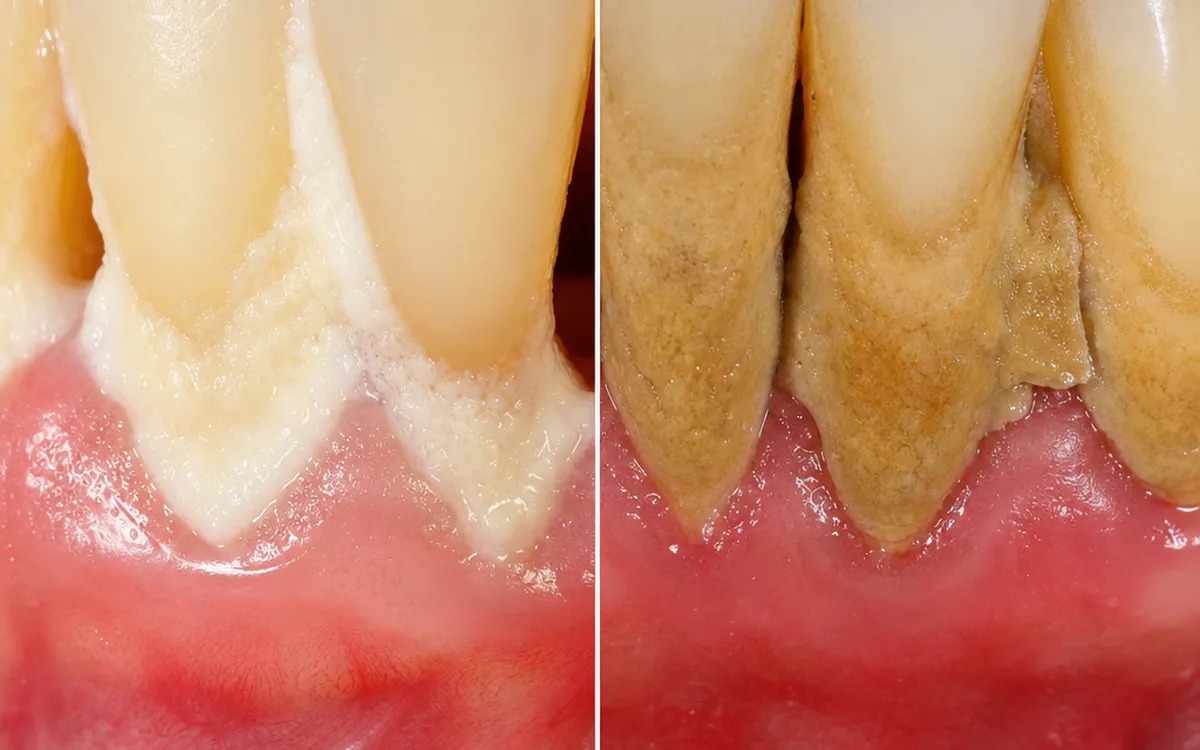
Tartar — also called calculus in clinical terminology — is plaque that has mineralized and hardened onto your teeth. When plaque is left undisturbed for as little as 24 to 72 hours, the minerals in your saliva (primarily calcium and phosphate) crystallize within the biofilm, transforming it from a soft, sticky film into a hard, rough deposit that bonds firmly to tooth surfaces.
Unlike plaque, tartar cannot be removed by brushing, flossing, or any home-care product. No toothpaste, mouthwash, or home remedy can dissolve or dislodge calculus once it has formed. Only a dental professional — a dentist or dental hygienist — can remove tartar, using specialized instruments such as ultrasonic scalers and hand scalers that mechanically break the bond between the calculus and the tooth surface.
Tartar typically forms first along the gumline, where saliva pools and plaque accumulates most readily. It can also develop below the gumline in the pockets between teeth and gums — subgingival calculus — which is particularly dangerous because it harbours pathogenic bacteria in an environment that is impossible to clean at home.
One of the most insidious properties of tartar is its rough, porous surface. Once calculus forms, it creates an ideal substrate for additional plaque accumulation. Bacteria adhere more easily to the rough surface of tartar than to smooth enamel, which accelerates the cycle: more plaque → more tartar → more plaque. This self-reinforcing loop is why professional cleaning at regular intervals is not merely cosmetic — it is essential for breaking the disease cycle.
Key Differences Between Plaque and Tartar
While plaque and tartar are different stages of the same process, their characteristics, risks, and management strategies differ significantly:
Consistency
Plaque is a soft, sticky biofilm that can be wiped away with a toothbrush or floss. Tartar is a hard, mineralized deposit that is firmly bonded to the tooth surface and requires professional instruments to remove.
Visibility
Plaque is virtually invisible without a disclosing agent. You may feel a fuzzy coating on your teeth if you run your tongue along them, but you cannot see the biofilm. Tartar, by contrast, is often visible — it appears as yellow or brown deposits, particularly on the inner surfaces of the lower front teeth where salivary ducts empty mineral-rich saliva.
Removability
Plaque can be removed at home with consistent daily oral hygiene. Tartar cannot be removed at home — no consumer product can dissolve or dislodge calculus. Professional scaling is the only effective method.
Formation Speed
Plaque begins forming within hours after cleaning. Tartar calcifies from undisturbed plaque within 24–72 hours, though visible deposits typically accumulate over weeks to months of inadequate cleaning.
Health Impact
Plaque causes demineralization (leading to cavities) and gingival inflammation (gingivitis). Both conditions are reversible if caught early. Tartar perpetuates and accelerates disease by harbouring bacteria in a protected, unreachable environment, contributing to periodontitis, bone loss, and eventually tooth mobility and loss.
Surface Effect
Plaque forms a smooth biofilm layer. Tartar creates a rough, porous surface that accelerates further plaque accumulation — creating a self-reinforcing cycle of disease.
Why Plaque and Tartar Are Dangerous for Your Health
The dangers of plaque and tartar extend well beyond cavities and bad breath. The bacteria in dental biofilm produce toxins that trigger an inflammatory response in the gums. When this inflammation becomes chronic — as it does when tartar deposits continuously harbour bacteria below the gumline — the consequences become systemic.
Cavities and Tooth Decay
The acid produced by plaque bacteria erodes tooth enamel, creating cavities. Left untreated, decay progresses into the dentin and eventually the pulp, requiring fillings, root canals, or extractions — all far more expensive and invasive than the preventive cleanings that could have prevented them.
Gingivitis and Periodontitis
Plaque-induced inflammation begins as gingivitis — red, swollen gums that bleed easily. Gingivitis is reversible with professional cleaning and improved home care. However, when tartar accumulates below the gumline, the inflammation progresses to periodontitis, where the supporting bone and fibres around the teeth are destroyed. Periodontitis is not reversible; it can only be managed. Without treatment, it leads to tooth loss.
Systemic Health Connections
An expanding body of research links chronic periodontal disease to serious systemic conditions. The inflammatory mediators and oral bacteria that enter the bloodstream through inflamed gum tissue have been associated with cardiovascular disease, adverse glycaemic control in diabetics, respiratory infections, and adverse pregnancy outcomes. The mechanism is straightforward: chronic oral inflammation does not stay confined to the mouth. Your oral health is inseparable from your overall health.
Bad Breath and Aesthetic Concerns
The volatile sulphur compounds produced by plaque bacteria are the primary cause of halitosis. Tartar's porous surface absorbs stains from coffee, tea, red wine, and tobacco, creating persistent discoloration that no amount of brushing can remove. These aesthetic effects are often the first signs that motivate patients to seek professional care.
How Professional Cleaning Removes Plaque and Tartar
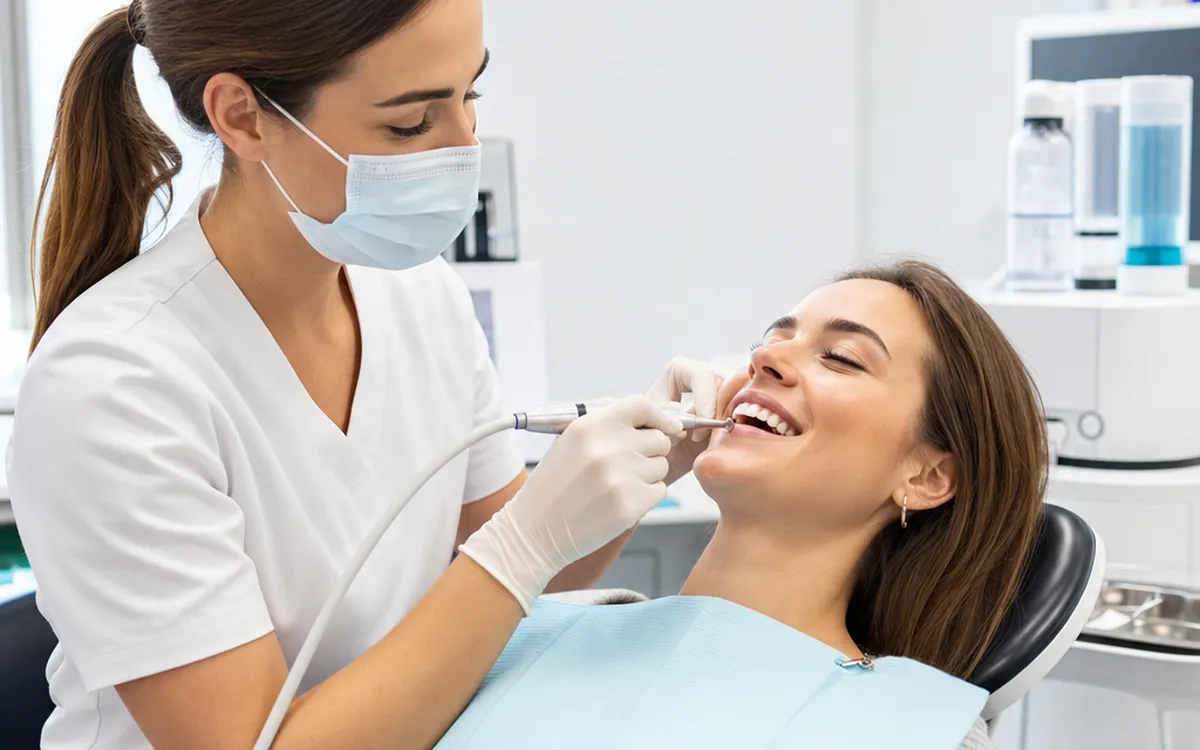
Professional dental cleaning — whether a routine prophylaxis or a more intensive periodontal treatment — is the only way to remove tartar and thoroughly disrupt plaque biofilm in areas that home care cannot reach.
Traditional Cleaning
A conventional cleaning typically involves scaling with hand instruments or ultrasonic devices to remove tartar, followed by polishing with an abrasive paste to remove surface stains. While effective at removing visible deposits, traditional polishing reaches only about 50 % of the tooth surface — it cannot access the interdental spaces and subgingival areas where biofilm thrives.
Guided Biofilm Therapy (GBT)
Guided Biofilm Therapy represents a fundamentally more effective approach. By making plaque visible with a disclosing agent, then using AIRFLOW technology with warm water and gentle erythritol powder to flush biofilm from all surfaces — including between teeth and below the gumline — GBT removes up to 100 % of the biofilm compared to roughly 50 % with traditional methods. The Piezon ultrasonic device then removes any remaining tartar with painless technology, and a fluoride treatment protects the enamel.
For patients with gum disease who require more intensive care, the PERIOFLOW component of GBT can deliver the warm water and erythritol powder directly into periodontal pockets up to 9 mm deep, decontaminating the area without the need for local anaesthesia in many cases. This makes GBT a gentler alternative or complement to traditional deep cleaning (scaling and root planing).
Prevention Tips: Keeping Plaque at Bay
Since plaque forms within hours of brushing and tartar calcifies within days, prevention is a daily commitment. Here is an evidence-based routine that minimizes plaque accumulation and reduces your risk of tartar formation:
- Clean between teeth first. Use interdental brushes or floss before you brush. This dislodges plaque from the spaces between teeth where your toothbrush cannot reach, and the subsequent brushing sweeps it away. Make this a once-daily habit, ideally before bed.
- Brush thoroughly, twice daily. Use a soft toothbrush — electric models are particularly effective — with fluoride toothpaste. Hold the brush at a 45-degree angle to your gums and use gentle, circular motions for a full two minutes. After brushing, spit out the toothpaste but do not rinse — leaving the fluoride residue on your teeth maximizes its protective effect.
- Replace your toothbrush head regularly. Worn bristles clean less effectively. Replace your manual toothbrush or electric brush head every three to six months, or sooner if the bristles appear frayed.
- Use fluoride toothpaste. Fluoride remineralizes enamel that has been weakened by plaque acids and makes teeth more resistant to future acid attacks. It is one of the most well-researched and effective tools for cavity prevention.
- Limit sugary and acidic foods. Bacteria in plaque feed on sugars and produce acid. Reducing your intake of sugary snacks, acidic drinks, and starchy foods that break down into sugars limits the fuel available to plaque bacteria.
- Stay hydrated. A well-hydrated mouth produces adequate saliva, which naturally buffers acids and washes away food particles. Dry mouth — caused by medications, mouth breathing, or dehydration — dramatically increases plaque accumulation.
- Visit your hygienist regularly. No matter how diligent your home care, some plaque will inevitably escape and calcify into tartar. Professional cleaning at intervals recommended by your hygienist — typically every three to six months, depending on your risk factors — is the only way to remove tartar and break the cycle before it leads to disease.
If you are looking for a more comfortable and thorough cleaning experience, professional dental cleaning at Krystal Dental Hygiene uses the GBT protocol to ensure every trace of biofilm is identified and removed — not just the visible deposits. For tips on proper flossing technique, see our guide to flossing the right way. And if you experience discomfort during cleanings due to sensitive teeth, GBT's warm water and gentle erythritol powder make the process remarkably comfortable.
This article was written by Krystyna Korolchuk, a registered dental hygienist and independent practice owner licensed under the Dental Hygienists Act, 1991 and regulated by the College of Dental Hygienists of Ontario (CDHO).
Ready to Break the Plaque → Tartar Cycle?
Book your GBT cleaning at Krystal Dental Hygiene and experience the difference that 100 % biofilm removal makes for your oral health, comfort, and confidence.