Demand for teeth whitening has been steadily growing over the last couple of decades, and in recent years the trend has accelerated dramatically, driven in part by millennials and Generation Z chasing the appeal of an "Instagram-worthy" smile. There are several whitening options available, ranging from at-home strips to professional in-office treatments, but one question comes up again and again in my practice: what is the difference between LED and UV teeth whitening, and which one is right for me?
Both LED and UV lights are used alongside peroxide-based whitening gels to accelerate the bleaching process, yet they work in fundamentally different ways and carry different risks. Understanding those differences is the first step toward making an informed decision about your smile. Let's break it down.
What Is Light-Activated Teeth Whitening?
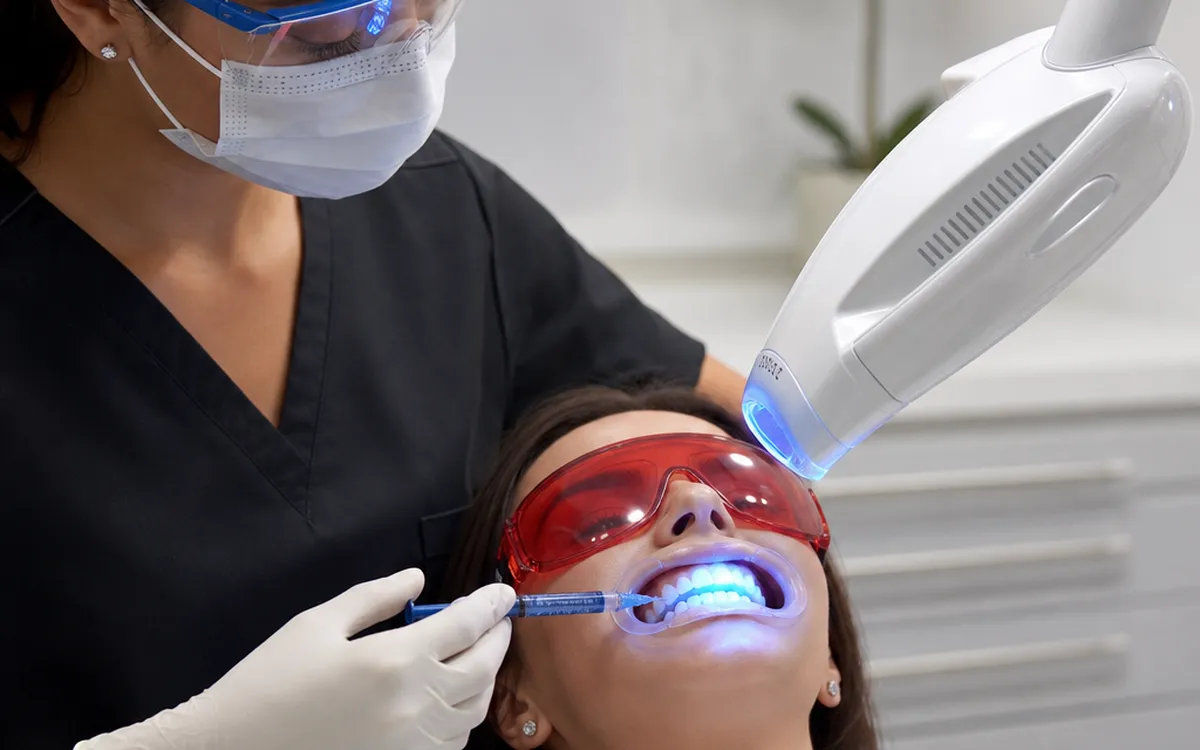
The light used in teeth whitening does not actually whiten teeth by itself. The process involves first applying a peroxide-based whitening gel to the teeth, and then using a light to accelerate the chemical reaction. The light excites the molecules in the peroxide gel, allowing the whitening agents to penetrate the enamel more quickly and break down stain molecules faster than the gel would on its own.
There are two broad categories of light-activated whitening: treatments administered by a dental professional in a clinical setting, and products purchased over the counter or online without dentist supervision. Over-the-counter light-activated kits tend to use a weaker concentration of peroxide, which means slower and less dramatic results. The two main types of light used in both settings are LED and UV. Although they serve the same basic purpose — accelerating the gel — each carries different side effects and safety considerations.
What Is LED Teeth Whitening?
LED stands for Light Emitting Diode. LED whitening devices use cold blue light technology to intensify the whitening process without radiating heat onto the teeth. You can find LED devices in both over-the-counter products and in professional treatments performed by a dental hygienist or dentist.
The key advantage of LED teeth whitening is that it is significantly gentler on teeth and gums compared with UV. Because LED light does not emit heat, there is no risk of burning the soft tissues in your mouth — a real concern with UV-based systems. LED technology also allows for more controlled, consistent light output, meaning the whitening gel is activated evenly across the treated teeth.
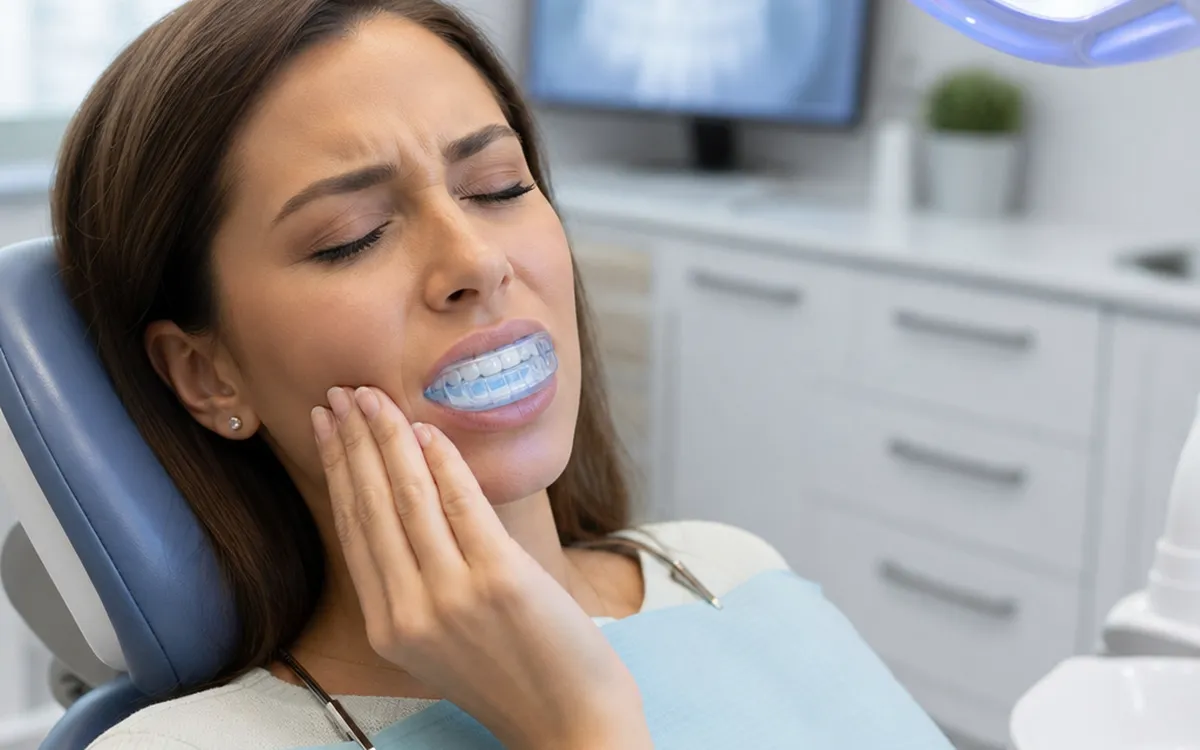
For patients who have experienced sensitivity or discomfort with other whitening methods, LED-based treatments are often the more comfortable option. In a professional setting, your dental hygienist can combine LED light with a desensitizing gel to further reduce the chance of post-treatment sensitivity.
What Is UV Teeth Whitening?
UV stands for Ultraviolet Light. UV whitening uses a form of electromagnetic radiation that generates heat during the whitening process. The type of UV light used in teeth whitening is typically a laser, and it is usually performed in a dental office because it carries a greater risk of burning the soft tissues due to the heat it emits.
Research has shown that UV rays can also be harmful in the long term, with potential damage to the eyes and an elevated risk of skin cancer — similar to the risks associated with tanning beds. Protective eyewear and careful shielding of the lips and gums are essential during UV whitening sessions.
The primary benefit of UV over LED is power: UV light can accelerate the whitening gel more aggressively, which may lead to faster results in a single session. However, that extra power comes with extra risk, and many dental professionals now prefer LED-based systems precisely because they offer a better balance of effectiveness and safety.
LED vs UV: Which Is More Effective?
Mixed reviews and studies exist on which teeth whitening method delivers the best results. Many researchers conclude that using light to activate the bleaching agent does not significantly increase the speed or quality of whitening compared with non-light-activated procedures. Others, however, have found that both LED and UV light-activated whitening produced greater lightening of tooth shade and maintained the lighter shade longer than non-light-activated methods.
What the evidence does suggest is that the concentration of the whitening gel and the duration of treatment matter far more than the type of light used. A professional-grade peroxide gel applied under the supervision of a registered dental hygienist will outperform any over-the-counter kit, regardless of whether it uses LED, UV, or no light at all.
Ultimately, there is no single definitive answer to which light-activated method is "better." Experts generally agree that the best whitening method depends on individual needs, oral health status, and personal preferences. This is precisely why a professional consultation is so valuable — it allows your hygienist to evaluate your teeth and gums, identify the type of staining you have, and recommend the approach most likely to give you the results you want safely.
LED vs UV: Which Is Safer?
Both LED and UV teeth whitening are non-invasive procedures, and both can deliver instantly whiter teeth. However, compared with UV light, LED light is considered safer while being just as effective for most patients.
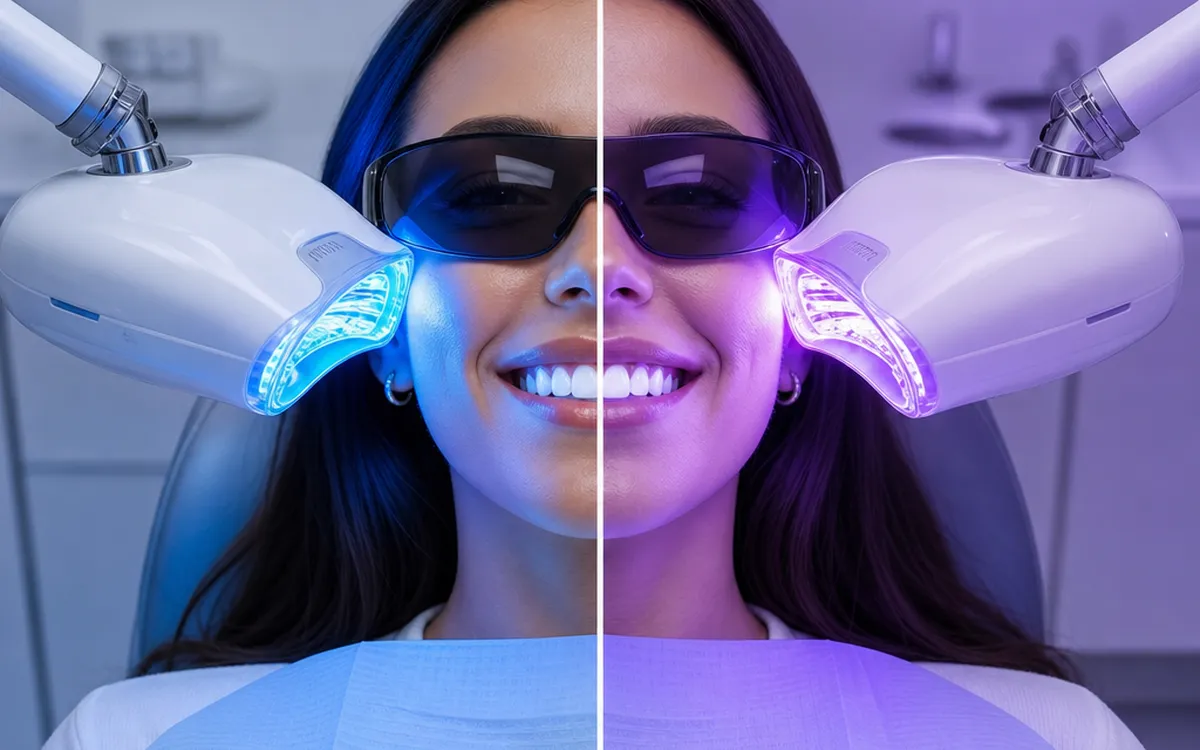
Here is a direct comparison of the two methods:
- Heat emission: LED produces no heat; UV generates heat that can burn oral tissues
- Soft tissue risk: LED is gentle on gums and lips; UV carries a burn risk requiring protective barriers
- Eye safety: LED poses no eye risk; UV requires protective eyewear
- Long-term risks: LED has no known long-term risks; UV exposure has been linked to skin and eye damage
- Cold sore trigger: LED does not trigger cold sores; UV may trigger outbreaks in susceptible patients
- Effectiveness: Both can accelerate whitening; professional gel concentration matters more
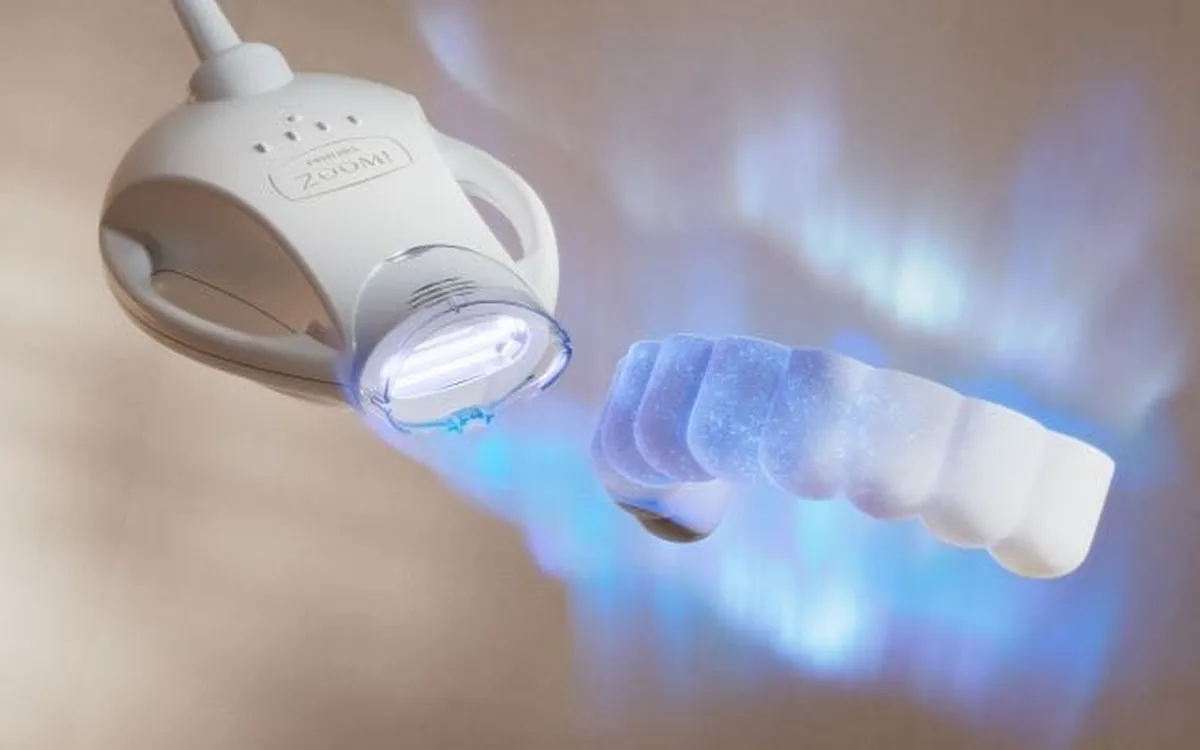
For the vast majority of patients, LED-based professional whitening offers the best combination of safety, comfort, and results. At Krystal Dental Hygiene, we use Philips Zoom! Whitening, which employs LED light technology combined with professional-grade whitening gel and ACP (Amorphous Calcium Phosphate) desensitizing gel — making it one of the safest and most comfortable in-office whitening systems available.
Teeth Whitening Best Practice and Recommendations
Whether you choose LED or UV whitening, following best practices ensures the safest and most satisfying outcome:
- Always consult a dental professional first. Not everyone is a good candidate for whitening. If you have active tooth decay, receding gums, or untreated gum disease, whitening can worsen those conditions.
- Choose professionally supervised treatments. Professional in-office whitening uses higher-quality gels, custom application, and real-time monitoring that over-the-counter products simply cannot match.
- Follow manufacturer guidelines. If you do use an at-home kit, never exceed the recommended volume, frequency, or duration of use.
- Stop if you experience sensitivity or irritation. Allow your teeth and gums to return to normal before trying again, and consult your hygienist.
- Avoid staining foods and drinks for 24–48 hours after whitening. Carbonated and acidic beverages, coffee, tea, red wine, and dark sauces can all compromise fresh whitening results.
- Don't overuse whitening products. More is not better — over-whitening can thin enamel and cause permanent sensitivity.
How Guided Biofilm Therapy Complements Whitening
Removing extrinsic stains caused by tea, coffee, tobacco, red wine, and food dyes can leave teeth looking several shades whiter without any whitening treatment at all. Guided Biofilm Therapy (GBT) is one of the safest and most effective ways to clean teeth thoroughly, because AIRFLOW® technology can access 100 % of the tooth crown to remove plaque biofilm and stains — even in areas that traditional scaling misses.
Removing the sticky film of bacteria and hardened tartar not only improves the colour of your teeth but also allows light to bounce off the enamel more easily, giving teeth a glossier, naturally brighter appearance. GBT can also help maintain the colour of your teeth after whitening by keeping stains at bay between touch-up sessions.
Choosing non-invasive approaches like Guided Biofilm Therapy complements cosmetic dental treatments by ensuring the underlying oral health is optimal. It helps prevent the gum disease that leads to unsightly recession, and it enhances the effectiveness of whitening procedures by ensuring no stain or deposit interferes with the bleaching process.
Final Thoughts on Dental Whitening Safety
Whichever teeth whitening procedure you choose, always consult with your dental hygienist or dentist to discuss options that will allow you to make an informed choice. Teeth whitening treatments are not right for everyone — if you have active decay, exposed roots, or gum disease, whitening can do more harm than good. A professional will recommend a treatment plan that considers your full dental history and oral health needs.
At Krystal Dental Hygiene, we offer professional teeth whitening in Toronto using Philips Zoom! Whitening with LED light — the gold standard in safe, effective, in-office whitening. We also provide whitening touch-ups every 6–12 months to keep your smile bright year-round, and thorough professional cleanings using GBT to maximize and maintain your results.
This article was written by Krystyna Korolchuk, a registered dental hygienist and independent practice owner licensed under the Dental Hygienists Act, 1991 and regulated by the College of Dental Hygienists of Ontario (CDHO).
Ready for a Brighter, Safer Smile?
Book a professional whitening consultation and find out which treatment is right for your teeth.